

Key Takeaways
- LLMs reward content that is clear, well-structured, chunked by topic, and easy to parse—with strong hierarchy, short sections, and extractable formatting.
- Choose topics based on real user questions and long-tail intent; prioritize depth (1,500–3,000 words) and avoid thin or overly broad content.
- Build authoritative topic clusters with strong internal linking so AI systems understand relationships and trust your domain.
- Strengthen credibility with citations, original research, expert sources, and schema markup (FAQPage, HowTo, Article, etc.) to improve extraction and citation rates.
- Maintain freshness and technical health: fast loading, crawlable pages, minimal JavaScript, and frequent content updates with clear “Last Updated” signals.
Who This Guide is For
This strategic guide can be followed by anyone but is particularly useful for
- Marketing Leaders planning long-term AI visibility initiatives
- Content Strategists developing frameworks for AI-optimized content creation strategy
- SEO Professionals starting to merge traditional SEO with GEO
- Technical Teams responsible for implementing schema and crawlability
Understanding How LLMs Read Your Content
The Fundamental Difference
Understanding how LLMs read content is now a core component of any content strategy in the age of AI. Unlike traditional search engine crawlers that rely heavily on keywords, metadata, and link structures, LLMs interpret content by breaking it into tokens and analyzing the relationships between words, sentences, and concepts using attention mechanisms.
LLMs prioritize:
- Semantic clarity: Does this content express a clear idea?
- Coherence: Is the information logically organized?
- Direct answers: Does it address queries explicitly?
- Order and hierarchy: How is information presented?
- Formatting cues: Bullets, tables, and structural elements
Traditional SEO rewards precision and repetition; generative engines prioritize content that is well-organized, easy to parse, and dense with meaning.
The Chunking Principle
LLMs break content into “chunks” for processing. Each chunk is converted into a numeric vector that captures its meaning, so when you submit a question, the model transforms your prompt into a similar vector and searches for the closest matches.
For example, if you combine different topics under one heading (like “Permissions and Rates”), the LLM treats them as a single chunk. When users ask about permissions, the model might return both permission instructions and rate-limit details since it views them as inseparable.
To write well-structured LLM content, consider separating distinct topics into dedicated sections with unique headings.
Choosing Topics for AI Visibility
Traditional SEO keyword research focuses on search volume and competition. For AI visibility, prioritize:
- Question-based queries: “How do I…”, “What is the best way to…”, “Why does…”
- Comparison queries: “X vs Y”, “alternatives to…”, “differences between…”
- Problem-solution queries: Topics where users seek definitive answers
- Long-tail informational queries: Detailed, specific questions over broad topics
Research Methods
- Use “People Also Ask” boxes and AI chat suggestions to find common questions
- Analyze queries in your analytics that are 10+ words long
- Test topics by asking ChatGPT, Claude, and Perplexity about your industry
- Monitor which competitor content gets cited in AI responses
Content Gap Analysis
Query AI tools about topics in your domain. If they can’t answer or cite outdated sources, you’ve found an opportunity.
Content Depth Requirements
LLMs favor content that is comprehensive enough to be authoritative but structured enough to be parseable, making a strong content development strategy essential.
Optimal Content Characteristics
- Length: 1,500-3,000 words for pillar content (blog posts, guides)
- Depth: Answer the primary question AND anticipated follow-up questions
- Breadth: Cover related subtopics without diluting focus
- Structure: Break comprehensive content into clearly labeled sections
Avoid
- Thin content (<500 words) that lacks depth for meaningful extraction
- Kitchen-sink articles (>5,000 words) covering too many unrelated topics
- Dense paragraphs without clear section breaks
Content Architecture for AI
AI systems understand relationships between pages. Instead of building stand-alone pages, build topic clusters to signal authority.
Hub-and-Spoke Model
Pillar Page: “Complete Guide to Marketing Automation”
Spoke: “Email Marketing Automation Best Practices”
Spoke: “Lead Scoring Models Explained”
Spoke: “Marketing Automation vs. CRM”
Spoke: “ROI of Marketing Automation”
Spoke: “Marketing Automation Implementation Guide”
Internal Linking Strategy
LLMs follow links to understand context and relationships. A well-linked cluster signals comprehensive coverage of a topic.
- Pillar page links to all spokes
- Spokes link back to pillar
- Spokes link to related spokes when relevant
- Use descriptive anchor text: “learn about lead scoring models” not “click here”
Multi-Format Content
While LLMs primarily process text, content format affects discovery and engagement:
Recommended Format Mix
- Long-form guides (1,500-3,000 words): Pillar content for authority
- Short FAQs (300-500 words): Quick answers that get cited frequently
- How-to tutorials (800-1,500 words): Step-by-step with HowTo schema
- Comparison pages (1,000-1,500 words): “X vs Y” structured tables
- Case studies (800-1,200 words): Real examples with specific metrics
- Listicles (800-1,200 words): “10 Best…” with structured sections
Format Selection Guide
- Definitional queries: FAQ format or short explainer (500-800 words)
- How-to queries: Step-by-step tutorial with HowTo schema
- Comparison queries: Side-by-side tables with clear winners
- Best practices: Listicle format with numbered sections
- Comprehensive guides: Long-form pillar content with nested hierarchy
Building Citation Worthiness
What Makes Content Citation-Worthy
LLMs cite content that appears authoritative, factual, and properly sourced.
Citation Best Practices
- Cite your sources: Link to original research, studies, and data
- Original research: Conduct surveys, compile data, publish unique insights
- Expert quotes: Include interviews or quotes from industry experts
- Primary sources: Reference original sources, not aggregators
- Attribution format: “According to [Source], [Statistic/Claim]”
Example:
Weak: “Studies show that marketing automation improves results”
Strong: “According to a 2024 study by Forrester Research, companies using marketing automation see a 14.5% increase in sales productivity and a 12.2% reduction in marketing overhead (Source: Forrester)”
Red Flags to Avoid
- Unattributed statistics or claims
- Circular references (“experts say…”)
- Outdated sources (>3 years old for fast-moving industries)
- Self-referential claims without external validation
Adding Schema Markup (Structured Data)
Why Schema Matters for LLMs
Think of schema as the “nutrition facts” of your page. It organizes the information on your page into structured data (tables) that LLMs can easily scan to understand what they’re consuming. There are schema types for just about every industry and circumstance, but we can point to a select few that are a must for your site.
Priority Schema Types
- Organization Schema (Homepage): This is your foundation. It creates what schema experts call your “content knowledge graph”, essentially telling AI systems who you are, what you do, and how you’re connected across the web. It includes brand name, logo, social accounts, and website URL.
- FAQPage Schema (Blog Posts, FAQ Pages): When combined with FAQPage schema markup, structured FAQs increase chances of being cited or summarized in AI-driven search results.
- HowTo Schema (Tutorial Content or Technical Documentation): Perfect for step-by-step guides and instructional content.
- SoftwareApplication Schema (B2B SaaS): Apply this to your product, solution, or platform pages to define features and any necessary requirements.
- Service Schema: Defines services your company provides, such as print services, email automation, or web development. Add it to your product or solution pages when applicable.
- Article Schema (Blog Posts): Includes headline, author, publisher, publication date, modified date.
- Breadcrumb Schema: Shows the page’s place in your site structure, like Home > Blog > SEO Tips. It helps LLM tools understand content hierarchy.
Schema Implementation Guidelines
Most SaaS brands try to implement schema on every page at once and burn out halfway through. Focus on applying Schema Markup to the most relevant and valuable content, prioritizing quality and relevance over quantity.
Recommended Priority Order:
- Homepage (Organization schema)
- High-traffic blog posts (Article + FAQ schema)
- Product/service pages (SoftwareApplication/Service/Product schema)
- Tutorial content (HowTo schema)
- Contact pages (ContactPoint schema)
Implementation Example (FAQPage):
{
  "@context": "https://schema.org",
  "@type": "FAQPage",
  "mainEntity": [
    {
      "@type": "Question",
      "name": "How long does implementation take?",
      "acceptedAnswer": {
        "@type": "Answer",
        "text": "Most teams complete implementation in 10-14 days, including data migration and team training."
      }
    },
    {
      "@type": "Question",
      "name": "What integrations are available?",
      "acceptedAnswer": {
        "@type": "Answer",
        "text": "We offer native integrations with Salesforce, HubSpot, Slack, and 50+ other platforms via API."
      }
    }
  ]
}
Critical Rule: Keep the text in the markup identical to the on page text.
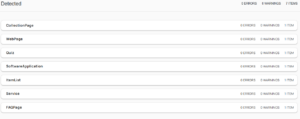
Validate Schema Structure
Even small errors can prevent AI systems from properly parsing your content.
Before publishing schema markup to your site, be sure to test it using Schema.org’s validator tool to check for structural errors in your markup. This catches syntax issues and checks for proper formatting.
Enter the URL or the code itself to check for any errors or warnings.
Test Rich Results (If Applicable)
Use Google’s Rich Results Test to validate schema types that can display rich results in search:
- FAQPage Schema
- Product Schema
- Review Schema
- HowTo Schema
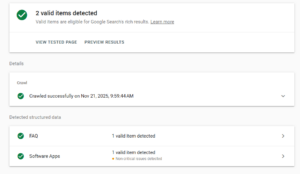
Organization, Article, and Breadcrumb schema won’t show results in this tool, but are still valuable for LLM parsing.
Technical Optimization Essentials
Crawlability & Accessibility
If AI tools can’t access your pages, you won’t show up in answers. Ensure pages are crawlable and indexable, fast and mobile-friendly, and secure with HTTPS.
JavaScript Limitations: Most LLM crawlers cannot render JavaScript. If your main content is hidden behind JavaScript, you are out.
- Use server-side rendering when possible
- Ensure critical content is in HTML, not loaded via JS
- Server-rendered content is more easily parsed by AI systems
Allow LLM Crawlers: If you use a CDN, like Fastly or Cloudflare, make sure LLM crawlers are not blocked by default settings.
Common LLM crawler user agents:
- GPTBot (OpenAI)
- Claude-Web (Anthropic)
- Google-Extended
- Perplexity Bot
For a more comprehensive technical deep dive, read our SaaS Technical SEO Guide
Content Freshness Signals
AI systems check publication dates and prefer recent information. Add “Last updated” dates prominently and Lastmod tag to signal freshness.
Implementation:
- Display “Last Updated: [Date]” prominently
- Update content regularly with fresh statistics and examples
- Use lastmod in XML sitemaps
- Ensure the last modified date is current in your Article or WebPage schema
- Implement IndexNow to push changes to search engines in real-time for faster reflection in AI outputs
Performance Optimization
Page speed affects both user experience and LLM crawling efficiency:
- Optimize images with appropriate compression
- Minimize render-blocking resources
- Use content delivery networks (CDNs)
- Implement lazy loading for below-fold content
Content Quality Signals: E-E-A-T for LLMs
Demonstrate expertise, experience, authoritativeness, and trustworthiness. Make sure your content is clear, factual, well-structured and easy for an AI to interpret and integrate into its generated responses.
Demonstrate Expertise:
- Cite original research and studies
- Include author credentials and bios
- Reference authoritative sources
- Include authoritative brand-building content, such as awards, testimonials, case studies, and press mentions
Show Experience:
- Include case studies with specific outcomes
- Share first-hand examples and scenarios
- Provide unique insights unavailable elsewhere
Build Authority:
- Develop comprehensive “pillar” pages on main topics and create related articles that explore subtopics in depth
- Maintain consistent publishing schedule
- Earn backlinks from reputable sources
Establish Trust:
- Publish detailed business profiles on trusted platforms like LinkedIn, Trustpilot, or Glassdoor
- Include contact information and transparency about your business
- Display security badges and certifications where relevant
- Display reviews or testimonials wherever possible
Content Freshness Strategy
AI systems strongly prefer recent content when answering queries. A well-structured but outdated page will lose to a newer competitor.
Monthly Updates (High-Priority Pages)
- Top 10 traffic-driving pages
- Product/pricing pages
- Homepage and key landing pages
- Update: Statistics, examples, screenshots, dates
Quarterly Updates (Core Content)
- Pillar content and key blog posts
- Technical documentation
- How-to guides
- Update: Add new sections, refresh examples, verify accuracy
Annual Updates (Supporting Content)
- Older blog posts with steady traffic
- Reference materials
- Archive pages that still receive visitors
- Update: Major content overhauls, restructuring
Signals to Include
- Prominent “Last Updated: [Date]” at the top
- “Updated for 2025” in titles when relevant
- Changelog section for technical docs
- Article schema with dateModified field
Quality Assurance Framework
Pre-Publication Checklist
- [ ] Content answers the primary query in first 100 words
- [ ] All statistics have sources and dates
- [ ] Headings follow proper hierarchy (H1 > H2 > H3)
- [ ] Paragraphs are 2-3 sentences maximum
- [ ] FAQ section includes 5-10 relevant questions
- [ ] Schema markup implemented and validated
- [ ] “Last Updated” date is current
- [ ] Author bio and credentials included
- [ ] Internal links to related content (3-5 minimum)
- [ ] Mobile-friendly and fast-loading (<3 seconds)
Content Audit Schedule
- Weekly: New content QA review
- Monthly: Top 10 pages performance check and updates
- Quarterly: Comprehensive content audit of top 50 pages
- Annually: Full site content review and archival decisions
Metrics to Track Per Page
- AI referral traffic (ChatGPT, Perplexity, Claude, Bing AI)
- Time on page from AI referrals
- Conversion rate from AI traffic
- Manual citation checks in AI tools
- Organic search visibility
Monitoring AI Visibility
Track referral traffic from LLM models using UTM parameters or direct sources from tools like Perplexity, ChatGPT browser plugin, and Bing AI.
Monitor:
- Direct referrals from AI platforms
- Reference rates: how often your brand or content is cited or used as a source in model-generated answers
- Query your own brand in AI tools to see what information appears
- Track changes in organic visibility
Emerging AI Visibility Tools
New AI visibility tools like Profound, Peec, and Gumshoe enable brands to analyze how they appear in AI-generated responses, track sentiment across model outputs, and understand which publishers are shaping model behavior.
Next Steps
Ready to implement these strategies? Our guide to AI-ready page design provides detailed examples and checklists for optimizing blog posts, commercial pages, and technical documentation.